|
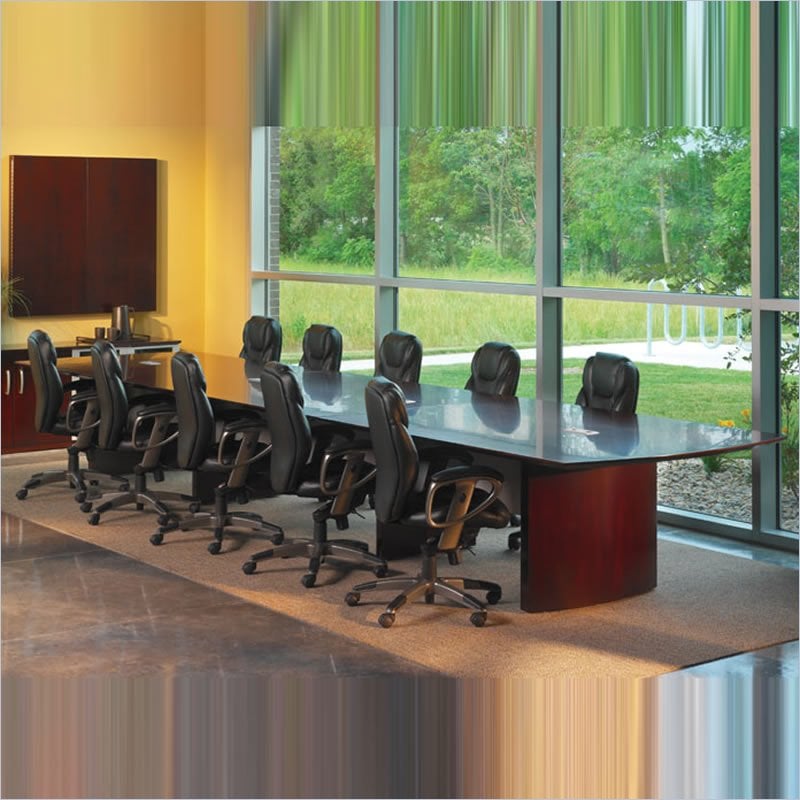
When mapping out your company’s floor plan, including a
conference room is essential. The
conference room is not only used for meetings
but could just as easily be used as a place to meet clients,
hold training sessions for employees and conduct interviews.
Sharp business owners know that presentation is important. An
attractive boardroom could play a positive
role in furthering the success of your business. You will want
your conference room to look professional yet warm; efficient
yet attractive. Before deciding on what kind of
conference table
and other meeting room furniture you will need, here are some
basic tips to help you to decide which one to choose.
|
Before You Begin
-
Decide how your boardroom will be predominately used, who will use it
and how many people will be using it on a regular basis. For example,
if you intend to use it mainly for meetings, a long solid wood
conference table
might be ideal. On the other hand, if you would like the option of
separating into smaller discussion groups for training purposes, a
modular conference table might better suit your needs.
-
Since the conference table will be the focal point of the room, it is
important that you do not end up with a table that is too large or too
small. Take measurements: the conference table should proportionately
fill the center of the room.
-
The ambiance and distinct character of your boardroom will largely
depend on the kind of conference table and type of base you select.
-
Make a checklist of all of the equipment you want to include, such as
a lectern, credenza, presentation easel, projection screen or
audiovisual cart. Know the dimensions to get a better idea of just how
much space you will need to plan for. Measure the room taking into
account windows, doors and ceiling height.
-
From the checklist of equipment, you will be able to determine what
power sources you will require and where the furniture should be
placed in relation to sockets and phone jacks. If you will be using AV
and teleconferencing equipment on a regular basis, consider buying a
conference table that includes a wire management trough or a
power/data access port.
-
No matter how much space has been allotted for the conference room,
you will be able to find a table that will fit.
Conference tables
come in all shapes and sizes. If space is a concern, select a smaller
round or square table.
What Kind of Conference Table Do I Need?
Size
A typical
conference table
is approximately 60 inches wide and 24 inches deep. Most
manufacturers will offer the same style of table in varying
widths, finishes and colors, allowing you to customize the
conference table to your individual requirements. To give you
an idea of how large the room needs to be to comfortably
accommodate a conference table of a particular size, the
following measurements listed below are for general reference
purposes only.
|
|
Size/Seating Capacity Chart
| Conference Table Size |
Minimum Room Size |
Optimum Room Size |
Seating Capacity |
| 60" W x 30" D |
13' L x 12' W |
15.5' L x 13' W |
4 – 6 |
| 72" W x 48" D |
14' L x 12' W |
15.5' L x 13' W |
4 – 6 |
| 84" W x 48" D |
15' L x 12' W |
16.5' L x 13' W |
4 – 6 |
| 96" W x 48" D |
16' L x 12' W |
17.5' L x 13' W |
6 – 8 |
| 120" W x 48" D |
18' L x 12' W |
19.5' L x 13' W |
8 – 10 |
| 144" W x 48" D |
20' L x 12' W |
21.5' L x 13' W |
10 – 12 |
| 150" W x 48" D |
21' L x 12' W |
22.5' L x 14' W |
10 – 12 |
| 168" W x 58" D |
22' L x 13' W |
23.5' L x 14' W |
12 – 14 |
| 180" W x 58" D |
23' L x 13' W |
24.5' L x 14' W |
12 – 14 |
| 192" W x 58" D |
24' L x 13' W |
25.5' L x 14' W |
14 – 16 |
| 240" W x 58" D |
28' L x 13' W |
29.5' L x 14' W |
18 – 20 |
| 288" W x 58" D |
32' L x 13' W |
33.5' L x 14' W |
22 – 24 |
|
What Kind of Conference Table Do I Need?
Rectangular conference tables
are a functional and classic choice for the boardroom. Since
the tabletop is a basic flat shape, the work surface is
suitable for other applications such as meeting and training
rooms. Some models can be joined together with ganging
hardware to create a multi-segmented conference table that
allows you to customize the table to the size of your
conference room.
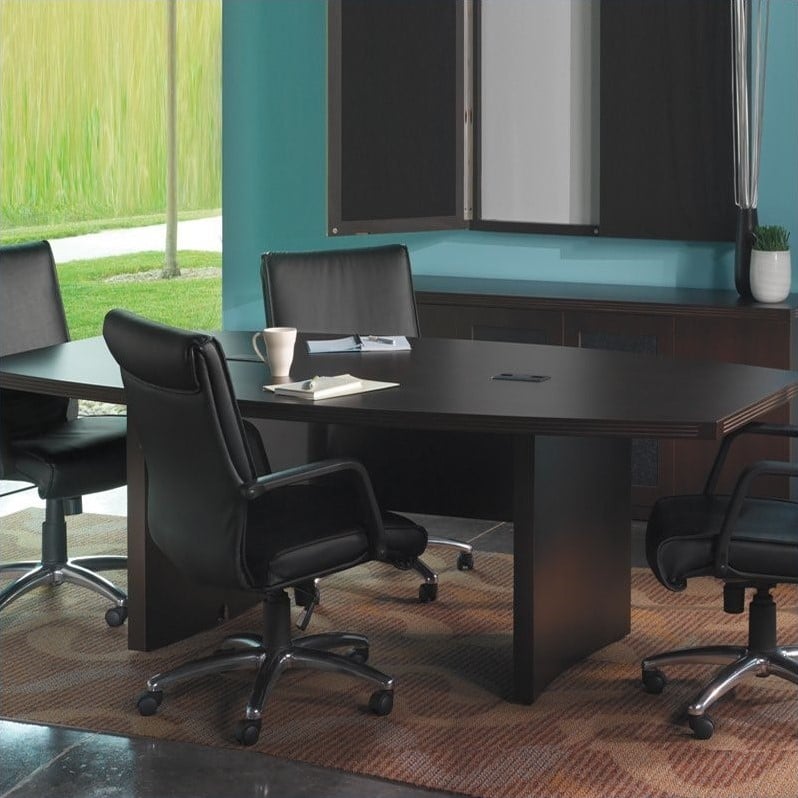
A
boat shaped conference tables
has convex sides, with slightly tapered ends and sometimes
sport rounded corners. Because of the slight curve of the
tabletop, they look elegant and stylish. If you intend to hold
video conferences or other types of visual presentations, many
manufacturers offer options such as a built-in cable
management panel or power and/or communication modules.
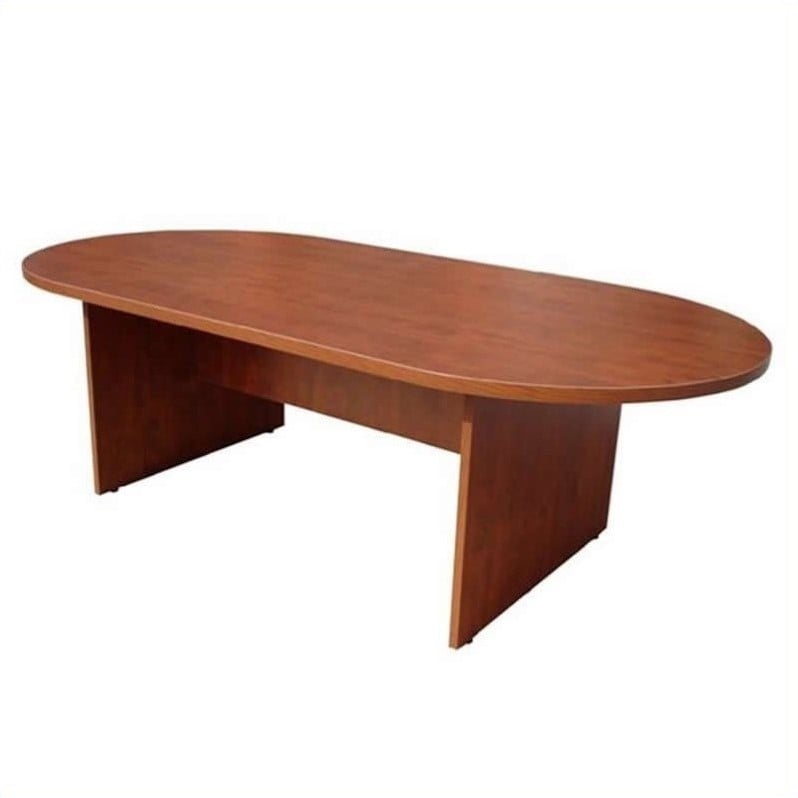
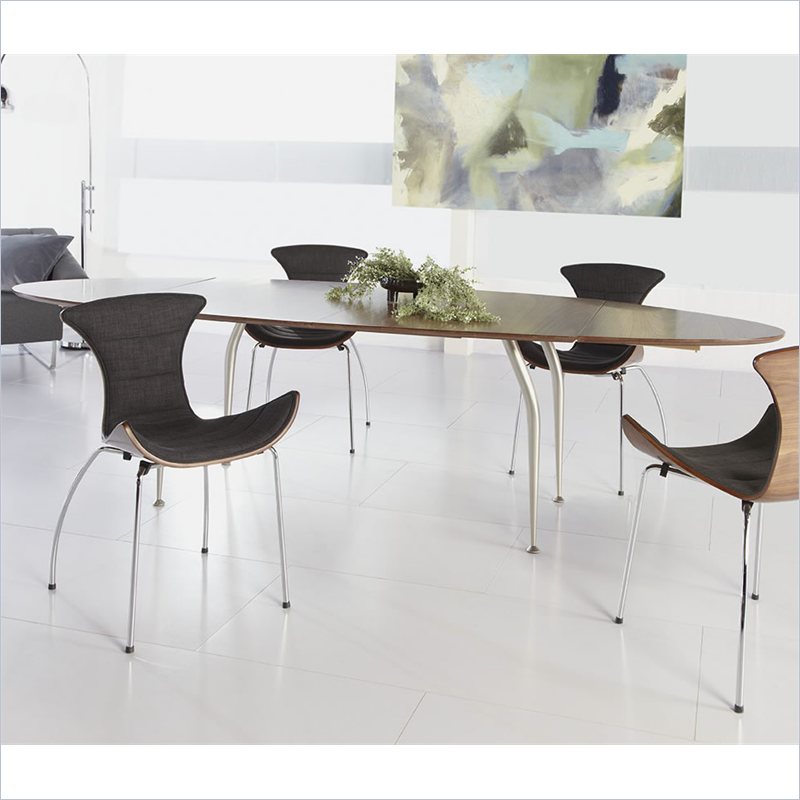
Racetrack or oval conference tables are pleasing to the eye
with their rounded edges and sleek lines. As with other styles
of boardroom tables, many manufacturers will offer the same
model of the
Racetrack conference tables
in a number of sizes and finishes, allowing you to find the
one best suited to your meeting room.
Octagaonal conference tables
tables are available in both round and rectangular shapes. A
round octagonal conference table is ideal for smaller spaces
as they are more compact. To make sitting more comfortable,
when selecting a round octagonal table, choose a base that
will ensure ample knee room. For larger boardrooms, select a
rectangular octagonal conference table for significant visual
impact.
A round or circular conference table is perfect for smaller
boardrooms because it uses vertical rather than floor space.
Round conference tables
create a relaxed and inclusive feel to a meeting, while still
providing plenty of room for everyone.
|
What Type of Conference Table Base Should I Select?
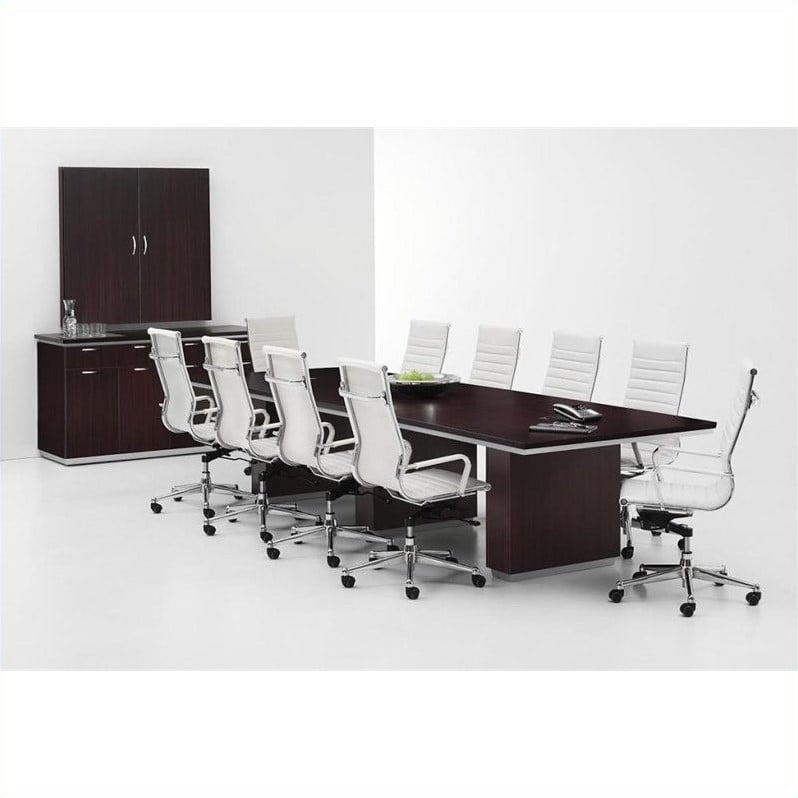
As the name suggests, the
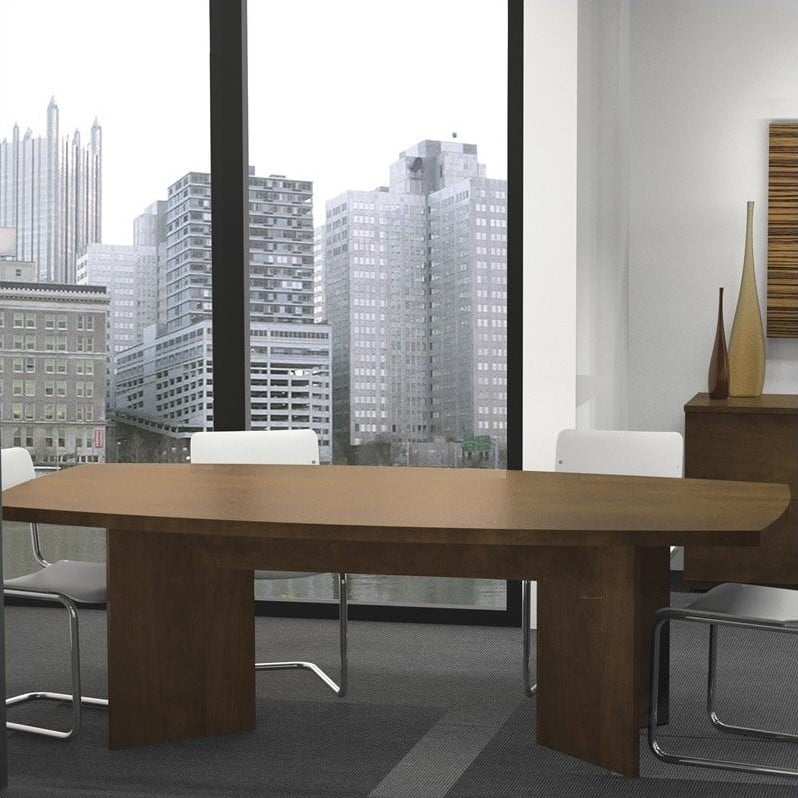
slab or panel base conference table is
supported by at least two, one at each end, slabs or panels.
This type of base gives the
conference table
balance and stability. Variations on the standard slab base
are the curved slab base and the split curved slab base, in
which the panel will have a groove running down the center of
the slab.
A trestle base conference table is one with
T-shaped uprights joined by a narrow base. The upright part of
the trestle can be either a solid panel or a number of slats
attached to the base. Depending on the style, it can bear the
weight of the table at each end or run down the length of the
center of the table.
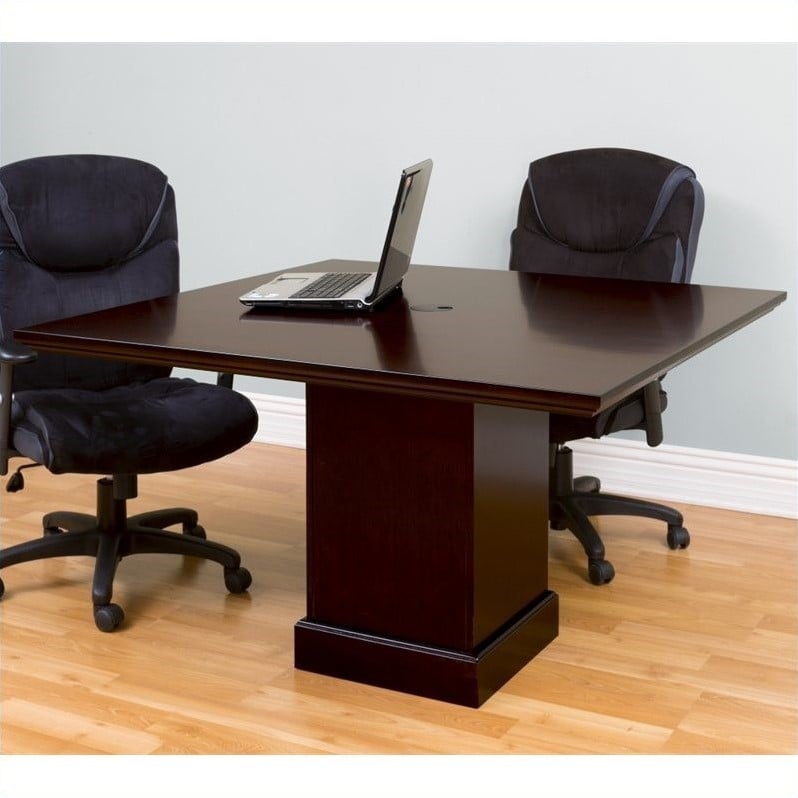
A conference table with traditional legs can
also be referred to as a post base style table. Posts may
resemble standard table legs or thin cylinder pedestals.
Pedestal bases are available in a variety of
shapes like square and drum/cylinder. They can be single,
double or multiple, depending on the diameter or the length of
the conference or meeting table. Pedestal bases tend to give
the boardroom a more formal look and feel.
|
|
|
What Kind of Material Should I Choose?
Engineered woods are made by gluing multiple
wood fibers together using heat and pressure. The two most
common types of engineered woods are particle board and medium
density fiberboard or MDF. Medium density fiberboard is
stronger than particle board and is more affordable than solid
wood because it is made from recycled materials. When finished
with laminates or veneers, MDF can look and feel like real
wood and can be just as strong and durable as solid wood
furnishings.
Laminates are a type of finish. Produced by
pressing layers of materials like wood and plastic together,
and then sealed with a thermosetting resin, they are formed
into sheets. The sheet of laminate material is then applied to
the surface of a conference table, usually made from an
engineered wood of some type, such as MDF. Laminates are
commonly used for conference room and office furniture because
they are strong, durable, easy to care for and don’t fade.
Wood veneers are produced using a heat and
pressure. Slices of real wood are adhered to the piece of
furniture and are paper thin, anywhere from 1/100 to ¼ inch
thick. This is a popular material for furniture construction
because it can be applied to any smooth, flat surface, giving
furniture pieces the texture and appearance of genuine solid
woods, while keeping costs down.
Considered to be the most durable material for furniture,
genuine wood furnishings are constructed from
wood cut from the trunks of trees like mahogany, oak or maple.
Because wood furniture is not made from recycled or processed
materials, it is more expensive. The terms hardwood and
softwood do not actually refer to the firmness or strength of
the wood. Hardwood is from a deciduous, broad-leafed tree (one
that loses its leaves) and softwood is from conifers or
evergreens, such as pines, hemlocks or spruces. Since each
piece of furniture is unique, it may be harder to match to
additional pieces, even if it is produced by the same
manufacturer.
|
|
Office Space Planning
Once you have selected your table, how you position the rest
of your meeting room furniture is important.
In order to easily move around the conference table, allocate
the approximate amount of space for the following:
-
30” for each chair when placing chairs around your
conference table
-
48-56” between the table and the wall for minimum/maximum
clearance
-
60” between the wall and the table for main aisle space
-
16” between the back of the chair (when pushed in) and the
wall to be able to walk sideways
-
24” between the back of the chair and the wall to walk
without having to turn sideways
-
56” between the table and a visual display board/easel
-
30” of free space for standing at the head of the table and
presenting material on the wall
|
What Style of Conference Table Should I Select?
Traditional furniture is characterized by
medium to dark finishes and architectural detailing such as
molding. Classic accents like inset panels and shell, leaf or
scroll motifs are reflections of historical periods such as
the Victorian era.
Transitional merges elements of both the
traditional and contemporary styles. Lines and forms tend to
be simple yet sophisticated, as demonstrated by the use of
straight lines contrasted with tapered legs.
Contemporary style is known for its use of
sleek lines and geometric shapes. It often mixes finishes and
materials together to create visual interest. While
fundamentally geometric, contemporary design is often tempered
by curved lines or textured detailing.
Modern conference or meeting tables are
distinguished by polished surfaces and angular forms. Features
of the modern style are sharp contrasting lines and
asymmetrical detail. The focus of this design style is on form
and function. Metal, glass and acrylic are common construction
materials.
|
|
|
|
What Else Should I Keep In Mind When Planning a Conference
Room?
-
Should visual presentations be a regular part of your
meetings, before making a final floor plan and arranging the
furniture accordingly, make sure that the natural light and
overheard lighting in the room will not interfere with
audiovisual presentations, videoconferencing, etc.
-
Select chairs for your conference table that include basic
ergonomic features such as controls for adjusting the
backrest and chair height, and has a waterfall seat edge.
Comfortable seating, especially for longer meetings or
presentations, will make it easier for attendees to focus on
the task at hand.
-
If beverages and snacks are an integral part of your
meetings, buy a
conference table
with a thick protective finish. Choose fabric office chairs
with a stain-resistant coating or easy-to-care for vinyl
chairs.
-
Reserve some aisle space for mobile pieces of equipment,
like an AV cart, that you intend moving around or in and out
of the room on a regular basis.
-
When purchasing a unit that includes glass shelves, doors or
tabletops, choose one that uses tempered glass. Tempered
glass is treated with heat or a chemical solution to make it
stronger and safer and it is designed to break into small
fragments rather large shards.
|
Looking for something else? Find all of our
office furniture here.
|
|