|
How to Buy A TV Stand
With such a huge selection of TV stands to choose from, it can be intimidating to find the right one. In this buying guide, we demystify the process and explain how easy it is to find the TV stand that is just right for you:
|
Where to Begin?
How Big is Your TV?
The kind of TV stand you choose will largely depend on the type of television you are buying the stand for. Buy the stand separately and not at the same time as you purchase your television and/or DVD player (or research both purchases ahead of time).
Be sure to buy a TV stand that is larger than your TV. Buying one that is smaller means that your TV is more likely to be knocked over. Also consider buying a stand that’s larger than your television; this will allow you to incorporate decorative touches as well as store your media.
It's also essential to make sure that the shelf depth of any unit you purchase is wide enough to accommodate your television and other audio/video equipment.
How Big is Your Room?
The size of your room also plays a role. Naturally, if you are a small space dweller you will want to look at options like a corner TV stand or a floating TV stand. Both of these styles free up floor space and can work better than a traditional unit in a tricky floor plan. A regular small size TV stand is always another option.
Consider a TV Mount
Many TV stands are no longer used to actually stand a TV. A popular option today is is to mount your LCD or plasma TV to a wall, using a TV mount that is stationary or on a swivel. In this scenario, the TV stand becomes a media console and display area.
Count Your Components
Everyone has a somewhat unique entertainment system. Whether you have a PVR, game system or DVD player (or all three) will affect your decision. Perhaps you are also using the TV stand to house a music system or CD collection or to display some decorative items. Take all of your needs into consideration and don't forget to plan ahead! If you see some new toys in your future, be sure to make enough room for them.
Get Flexible
Most people want to leave their TV console in one spot but others require some added flexibility. If this is you, be sure to go for an entertainment center that has been designed with casters (either visible or hidden). This is a great solution for some small spaces. For optimal functionality, select a TV stand with adjustable shelves; this will allow you to customize the unit to your needs.
Consider Your Cables
Since TV cabinets and open shelving units are designed to hold several pieces of equipment, tangled cables and wires can detract from the overall look of your entertainment center. If this is a concern, select a unit that includes a wire or cable management system.
What Type of Stand Should I Select?
Naturally the type of TV stand you select should be based on your needs. You will want to weigh in on your budget, style, TV size and room size before making a final decision.
We have an in-depth guide to choosing TVs here. But for a quick guide, here are the major types of TV stands:
LCD TV stands are designed specifically to hold LCD TVs. LCD televisions are light enough to be mounted right onto the wall. This means that these TV stands might not hold a TV at all but instead they provide space for your media and peripherals. If you decide to hang an LCD TV on the wall, try a wall, ceiling or swivel arm mount to create the best view for the space.
Plasma TV stands provide display and shelving options designed specifically for heavier plasma TVs. Combining strength with stability, extra-wide TV stands can usually accommodate larger plasma screens.
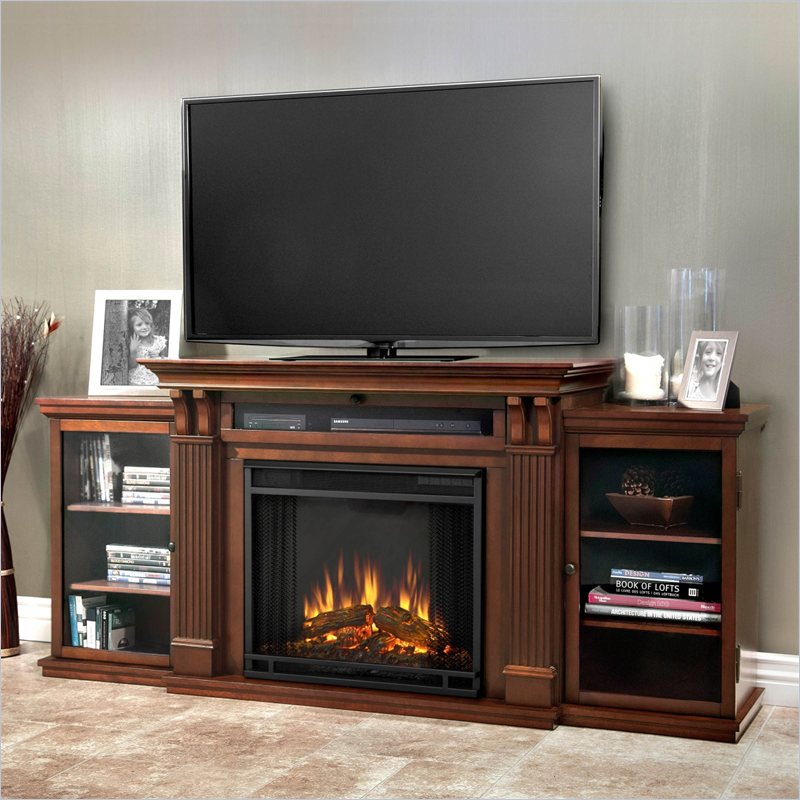
Entertainment centers and TV cabinets, including TV consoles, are pieces of entertainment furniture designed to give you access to your components, while providing storage for any items you wish to keep out of sight. Since components will be enclosed, select a cabinet that permits optimum ventilation and accessibility to power sources. |
 |
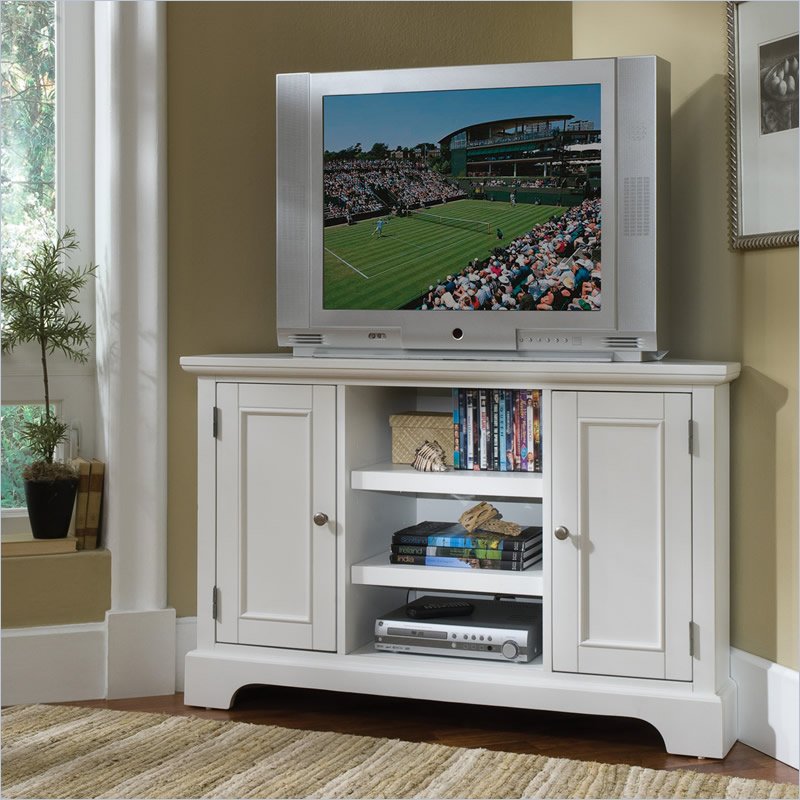
A corner TV stand fits perfectly into a corner of a room. Ideal for a small room or an awkward-shaped space, a corner TV stand can be a great space-saver. They do tend to be more compact than a standard television stand, but many corner TV stands will easily accommodate the larger flat screens.
A swivel TV stand is designed so that the viewing angle of the television can be adjusted as needed. It can have either a top shelf or bottom base that is capable of movement, from limited to a 360 degree swivel. A swivel TV stand is also a good choice for a room that has glare issues or is prone to too much sunlight at a certain time of day.
A TV stand is much more than just a place to put your television. In many rooms, it's also the focal point. So it's important to find one that strikes a balance between form and function. But with so much choice on the market today, where to begin? We have broken down the buying process into some easy-to-follow steps.
There are many factors you will want to keep in mind when purchasing a TV stand or cabinet. Some major ones are strength and durability, ventilation, room for expansion and accessibility.
 |
What Style of TV Stand Should I Select?
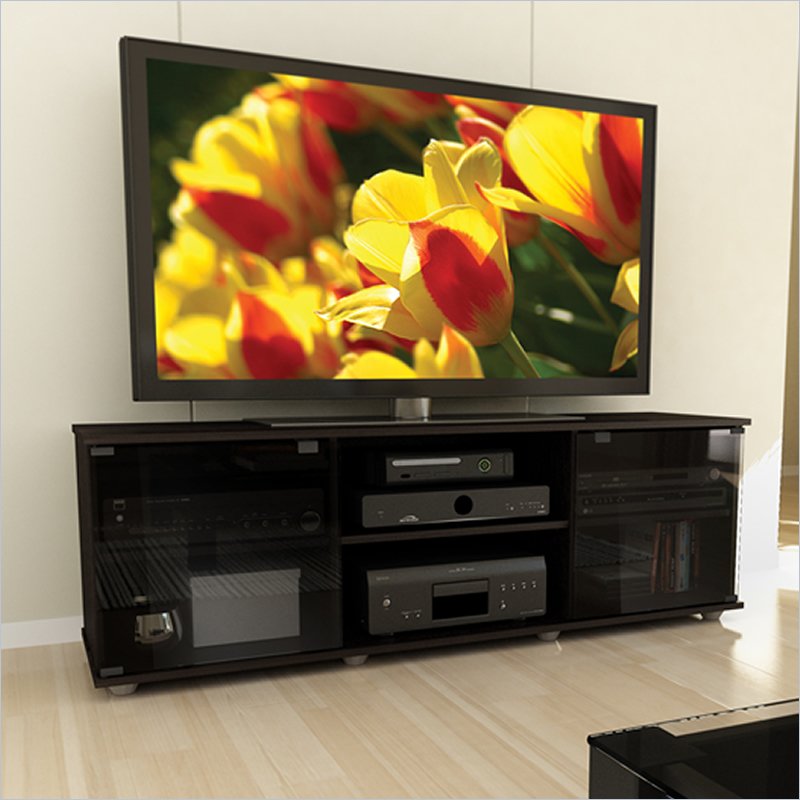
Gone are the days that you were relegated to a hulking black TV stand! TV stands are now available in every style imaginable. Go for your choice of modern, country or traditional styles in finishes like black, white, espresso and gray.
Transitional furniture is a combination of modern and traditional styles. Typical characteristics of contemporary design are curved lines and an espresso finish. The tension between two different design styles makes transitional media centers versatile and visually interesting.
Modern design furniture is typified by polished surfaces, geometric shapes and neutral palettes. Even though glass and metal are the most common materials used in contemporary furniture, a metal-and-glass entertainment center with wood accents might be the ideal fit for a more traditional space.
|
Traditional furniture is modeled after the styles and trends of historical periods, like the Victorian era. The cabriole leg that is often used for traditional furnishings first became popular during Queen Anne's reign. Characterized by ornate detail such as elaborate carvings and dark wood finishes, traditional style can also encompass the orderly and functional influences of the Shakers.
Country furniture reflects a casual lifestyle. Many of these TV stands offer a natural pine or wood finish combined with simple details. French Country style is the more grown-up version. Off white finishes and curvy design details are hallmarks of French Country design.
What Kind of Material Should I Choose?
Many factors will determine what kind of material you will select when purchasing a TV stand. If your décor is modern, a metal and glass TV stand would be a wonderful choice. If your style is more traditional, choose one made of wood with a rich finish.
Engineered woods, such as plywood, medium density fiberboard (MDF) and particle board, are options that have been produced from recycled wood products. These recycled materials are broken down into wood fibers, which are then glued together using heat and pressure to create panels. A TV stand made of MDF is more affordable than one crafted from genuine wood.
TV stands can also be made from genuine woods. Trees are cut down and varying grades of timber are produced. Timber can be made from either hardwoods or softwoods. The terms "hardwood" and "soft wood" do not refer to the wood's density. Hardwoods are from trees that lose their leaves in autumn, while softwoods are from coniferous trees, like pines or cedars that do not shed their needles. A TV stand made of genuine wood will last a long time.
A TV stand with a laminate finish is usually made of a type of engineered wood to which the laminate has been applied. Laminates are produced by pressing layers of plastic, metal, wood or a combination of materials together and then sealed with a thermosetting resin. A laminate finish can have a simulated wood grain, be a solid color or have a textured or metallic appearance. If you require the look of wood with a durable finish, this is the right choice for you.
A TV stand with a veneer finish can have the look and feel of one made from genuine wood. Veneers are produced from thin slices of real wood, which are then applied to the piece of furniture, usually made from an engineered wood like particle board, plywood or MDF. A veneer finish keeps costs down, while still creating a quality product with the look of real wood.
Many types of TV stands are made of a combination of metal and glass. Choose one made of aluminum, wrought iron or steel for strength, durability and good looks. For added safety, select a TV stand with tempered glass shelves. Designed to break into small fragments, tempered glass is made stronger and harder to break by treating it with heat or a chemical solution.